Few stages in sport carry the weight of the FIFA World Cup. Careers are defined in a matter of weeks, once every four years, under pressure that club football rarely matches. Some players rise to meet that pressure so completely that they become inseparable. In this article, we’ll explore ten of the greatest World Cup players in FIFA history.
Pelé (Brazil) – “O Rei”
Position: Striker/Center Forward
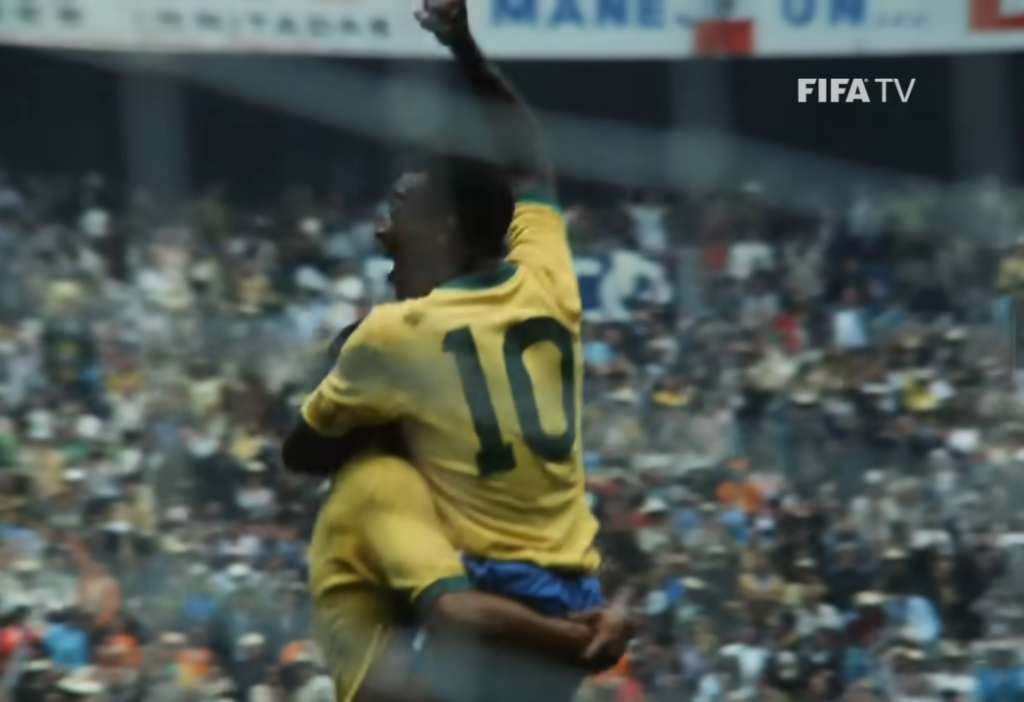
Summary: No player owns the World Cup quite like Pelé. He is the only man to win it three times — 1958, 1962, and 1970 — and he did it across three completely different eras of the sport. He arrived as a 17-year-old prodigy in the 1958 World Cup in Sweden, scoring twice in the final to announce himself to the world, and left as the leader of Brazil’s 1970 side, still widely regarded as the greatest team ever to play the game. Injuries limited him in 1962, but his influence on that squad, and on Brazilian football’s identity as a whole, was never in question. Pelé didn’t just win World Cups; he defined what winning one was supposed to look like.
Interesting Facts
- Pele scored a hat-trick in the semi-final against France in 1958, then added two more in the final against host nation Sweden.
- In 1970, opposition defenders reportedly tried to injure Pele deliberately in earlier tournaments to nullify him — Brazil’s federation eventually built a training regime specifically to protect him physically.
- Pele’s full name, Edson Arantes do Nascimento, is believed to be a tribute to Thomas Edison.
Diego Maradona (Argentina) – “El 10”
Position: Forward, Second Striker
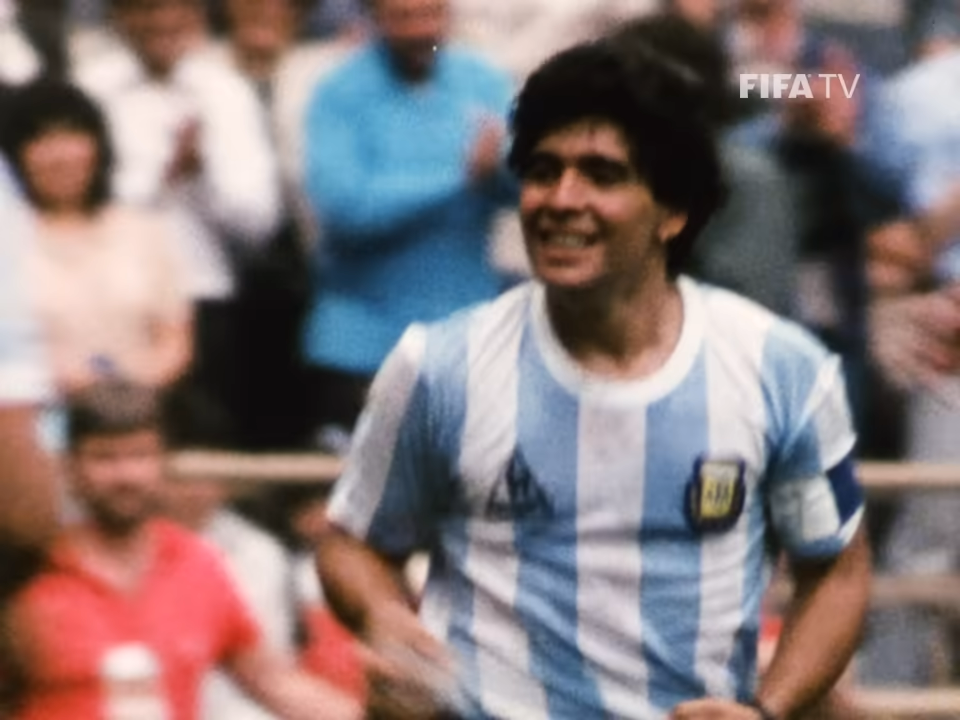
Summary: If Pelé represents sustained brilliance, Maradona represents the single greatest individual tournament anyone has ever played. In 1986, he was directly responsible for ten of Argentina’s fourteen goals across the competition, dragging a modestly talented squad to the title almost single-handedly. The quarter-final against England produced both the most notorious and the most sublime goals in World Cup history within four minutes of each other — the “Hand of God” and a mesmeric 60-yard run through the entire English defense. Maradona returned in 1990 to drag Argentina to a second consecutive final, this time on a weaker side and a badly injured ankle, before injustice caught up with him in 1994, when a failed drug test ended his World Cup career in disgrace. Even that fall couldn’t diminish what 1986 had already secured him: a permanent place among the game’s immortals.
Interesting Facts
- Maradona stands just 5’5″ (1.65m) — remarkably short for a player who dominated physically bigger defenders throughout his career.
- Maradona captained Argentina to the 1990 final as well, despite the team being far less talented than in 1986, dragging them there almost by will alone.
- Maradona failed a drug test at the 1994 World Cup (for ephedrine) and was sent home mid-tournament, an ignominious end to his World Cup career.
Franz Beckenbauer (West Germany) – “Der Kaiser”
Position: Center Back, Sweeper
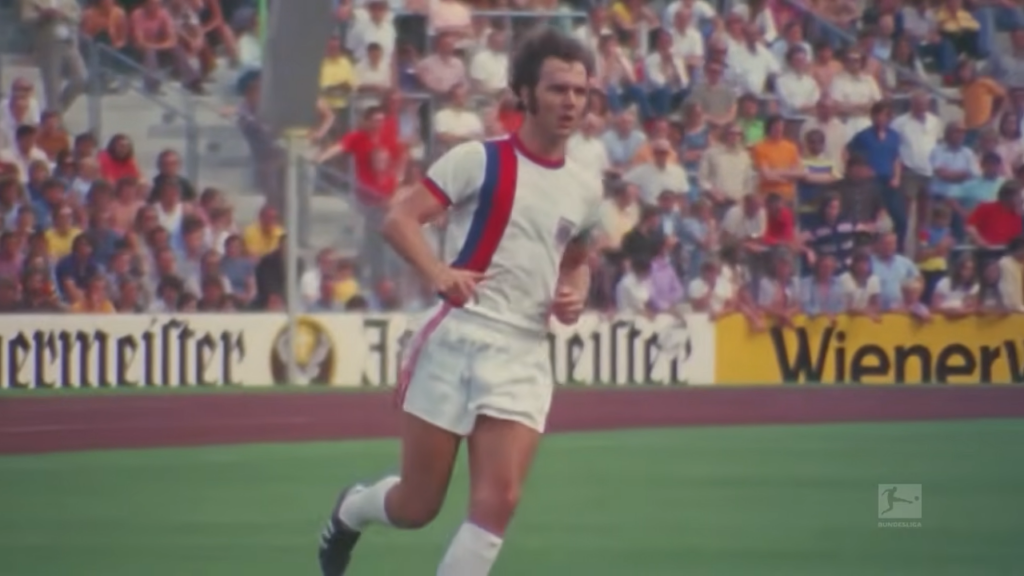
Summary: Beckenbauer changed how the game was played from the back. As the pioneer of the modern sweeper role, he read the game a beat ahead of everyone else, defending with elegance and launching attacks himself rather than simply breaking them up. He reached three consecutive finals-or-near-finals across the 1966, 1970, and 1974 tournaments, captaining West Germany to the trophy on home soil in 1974. Sixteen years later, he did something no one else has managed before or since: he won the World Cup again, this time as head coach, in 1990. Few players have shaped a position, and a national football identity, as completely as “Der Kaiser.”
Interesting Facts
- Nicknamed “Der Kaiser” (The Emperor), Beckenbauer effectively invented the modern attacking sweeper (libero) role at the World Cup, a position built around his own unique skill set.
- Beckenbauer played the 1970 semi-final against Italy with his arm in a sling, having dislocated his shoulder, because West Germany had already used all its substitutes.
- Beckenbauer is the only man in World Cup history to win the tournament as both captain (1974) and head coach (1990).
Johan Cruyff (Netherlands) – “The Flying Dutchman”
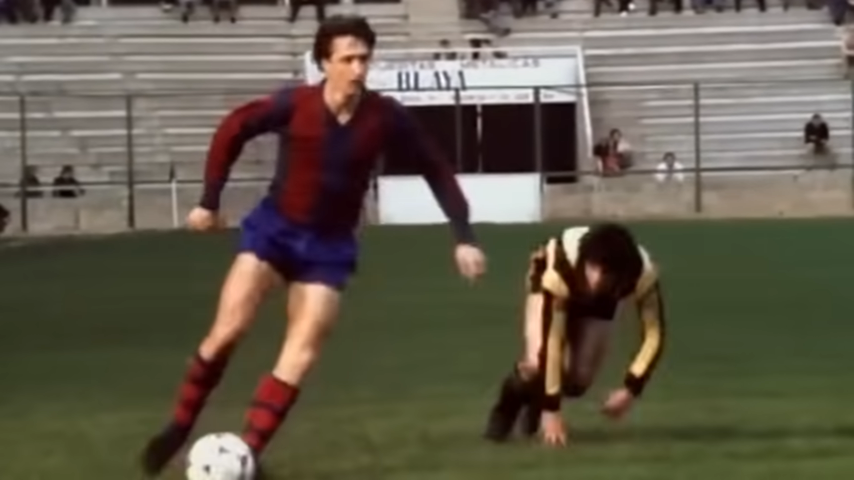
Position: Forward
Summary: Cruyff never won a World Cup — his Netherlands side lost the 1974 final to West Germany despite scoring inside the opening minute without a German player touching the ball. Yet his legacy dwarfs that result. Cruyff was the embodiment of “Total Football,” the fluid, interchangeable system that reshaped tactical thinking for decades afterward (think of Ted Lasso), and his individual brilliance in 1974 earned him the Golden Ball as the tournament’s outstanding player anyway. His influence stretched well beyond his own playing career: the coaching philosophy he later built at Barcelona traces directly back to ideas he first expressed on the World Cup stage as a player.
Interesting Facts
- Cruyff never won a World Cup, yet gave his name to a move — the “Cruyff Turn” — that he first unveiled on the sport’s biggest stage, against Sweden in 1974.
- He reportedly refused to play in the 1978 World Cup at all, for reasons long rumored to involve a kidnapping attempt on his family in Barcelona, though Cruyff himself gave other explanations over the years.
- Cruyuff famously wore the number 14 shirt instead of a more conventional number, at a time when squad numbers were still largely assigned alphabetically.
Zinedine Zidane (France) – “Zizou”
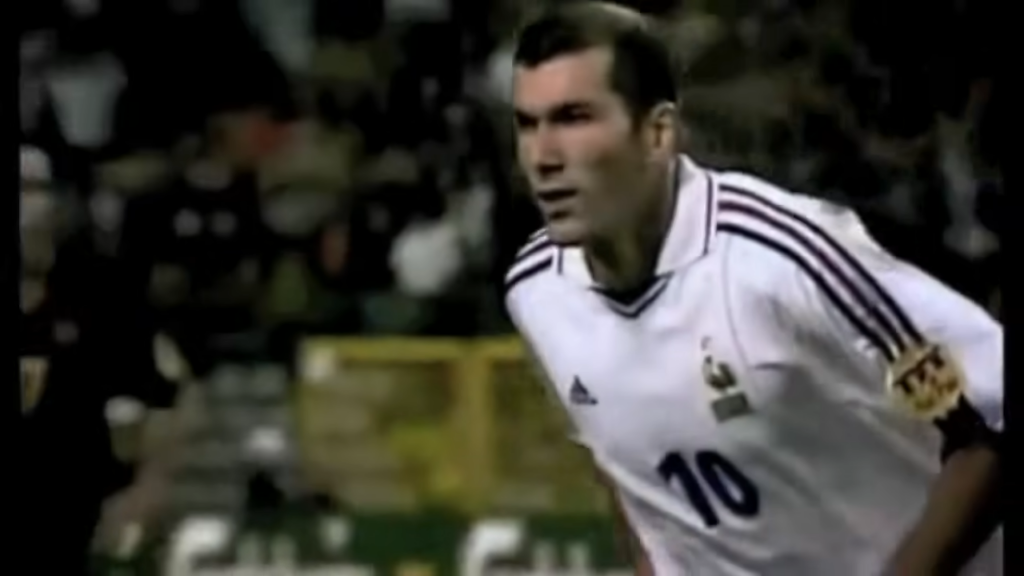
Position: Attacking Midfielder
Summary: Zidane’s World Cup story is really two stories. In 1998, he scored twice in the final to deliver France’s first title on home soil, capping a tournament in which he grew from a talented playmaker into the sport’s dominant figure. In 2006, at his final World Cup, he inspired an aging France side all the way back to the final with a run of imperious performances, chipping in a penalty with ice-cold nerve in the final itself — before his career ended in infamy when he headbutted Marco Materazzi and was sent off in extra time. France lost the final on penalties, but Zidane still won the tournament’s Golden Ball, a strange and fitting summary of a player capable of both transcendence and self-destruction on the same afternoon.
Interesting Facts
- Zidane is one of only a handful of players to score in two separate World Cup finals.
- Zidane is the son of Algerian immigrants from Kabylia. Born in Marseille in 1972, Zidane grew up in the working-class La Castellane neighborhood, the youngest of five children of parents who’d emigrated from a Berber-speaking village in Algeria before the Algerian War began.
- Zidane is set to become France’s national team manager. In late 2025, it was reported that Zidane would take over as manager of the French national team following the 2026 World Cup — bringing his story with Les Bleus full circle
Ronaldo Nazário (Brazil) – “Il Fenomeno”
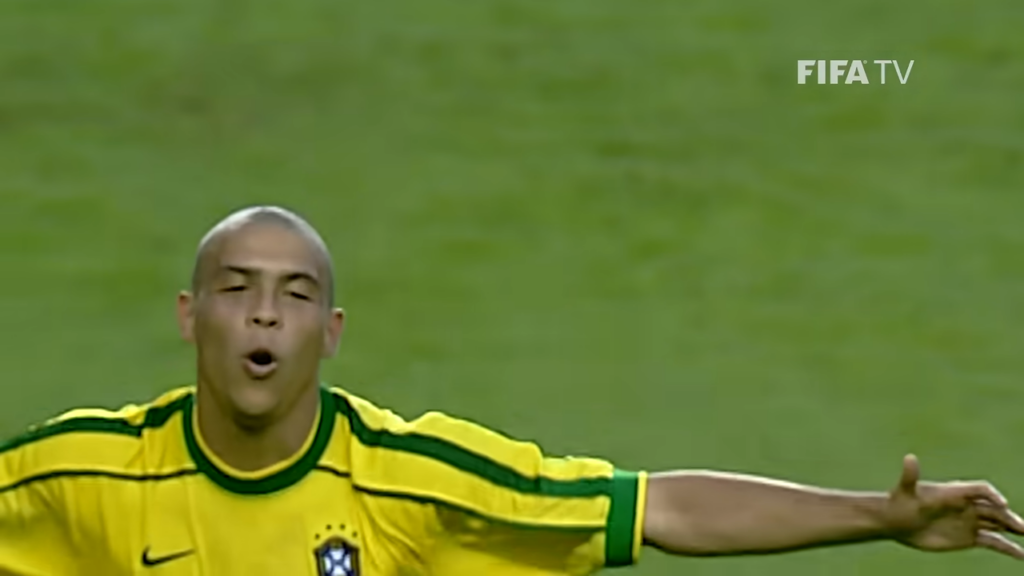
Position: Striker
Summary: Ronaldo’s World Cup career is a story of redemption. In 1998, a still-unexplained convulsive episode hours before the final threw his participation into chaos, and Brazil lost to France while Ronaldo played through visible distress. Four years later, after multiple career-threatening knee surgeries that many doubted he’d recover from, he returned to score both goals in the 2002 final and win the Golden Boot with eight goals overall, securing Brazil’s record fifth title. For years afterward, his tally of 15 World Cup goals across three tournaments stood as the all-time record — a testament to a player many still regard as the most complete striker the game has produced.
Interesting Facts
- Ronaldo’s tally of 15 World Cup goals across three tournaments made him the sport’s all-time leading World Cup scorer for several years, before being overtaken by Miroslav Klose.
- Ronaldo underwent multiple serious knee surgeries between 2000 and 2002, and many doctors doubted he’d play top-level football again before his 2002 comeback.
- Ronaldo’s a UN Goodwill Ambassador and regularly plays charity matches against Zidane’s all-star team. The two rivals-turned-friends have faced off for years in exhibition games for charitable causes, a lighter chapter in a career defined by dramatic highs and lows.
Miroslav Klose (Germany) – “Salto-Klose”
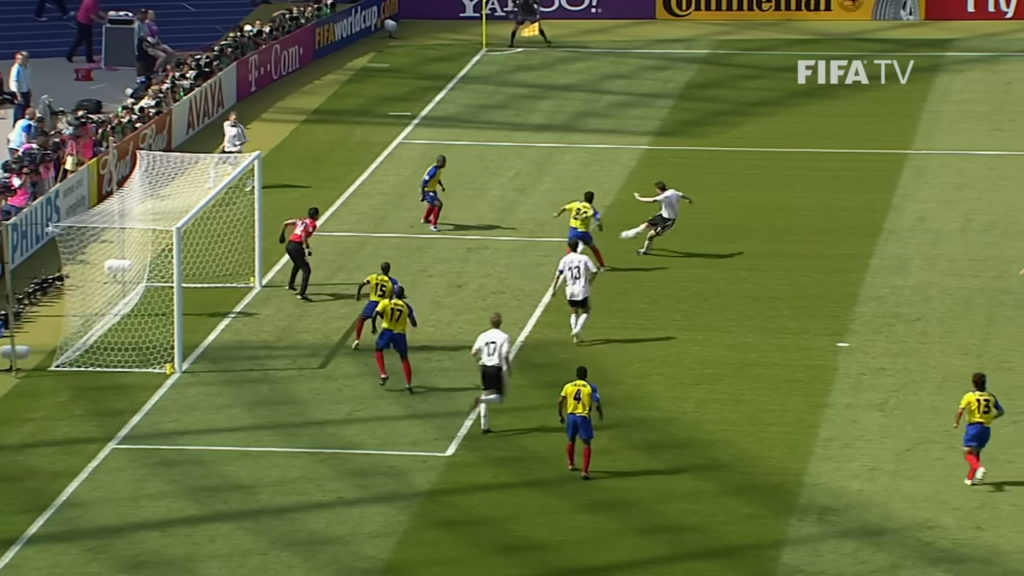
Position: Striker/Center Forward
Summary: Klose built a legend not from flash but from relentless, almost mechanical efficiency in front of goal. He scored in four consecutive World Cups between 2002 and 2014, a run of consistency matched by almost no one, and finally lifted the trophy at 36 years old in his fourth and final tournament. The goal that broke Ronaldo Nazário’s scoring record, in 2014, came fittingly against Brazil itself, during Germany’s stunning 7-1 semi-final victory. Klose’s total of 16 goals stood as the World Cup’s all-time record for more than a decade, a mark that once looked close to permanent.
Interesting Facts
- Klose was born in Poland and moved to Germany as a child; he could have represented Poland internationally but chose Germany instead.
- He is famous for his signature forward-flip goal celebration, a gymnastics move he performed dozens of times over his international career, earning him the signature “Salto-Klose.”
- Klose scored in four consecutive World Cups (2002–2014), finally winning the trophy at age 36 in his final tournament, on Brazilian soil.
Cristiano Ronaldo (Portugal) – “CR7”
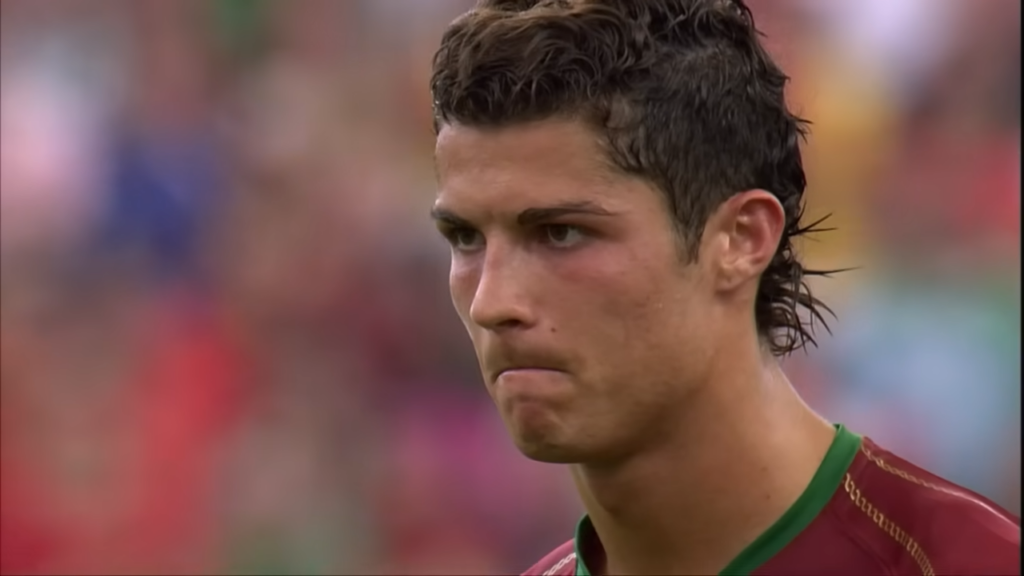
Position: Forward
Summary: Across six World Cups spanning twenty years, from 2006 to 2026, Cristiano Ronaldo has been a constant fixture of the tournament without ever winning it. He is the only player to score in six different editions, a record built on remarkable physical longevity and an insatiable will to keep competing at the sport’s highest level well into his forties. Portugal’s best result with him remains a quarter-final finish, and that absence of a title is often cited as the one gap on an otherwise complete résumé — but his sheer endurance across so many tournaments has become its own kind of legend.
Interesting Facts
- Cristiano Ronaldo missed a penalty against Iran in 2018 but still finished that tournament with a hat-trick against Spain that is regarded as one of the great individual World Cup performances.
- Cristiano Ronaldo became the oldest player to score in a World Cup knockout match when he converted a penalty at the 2026 tournament at age 41.
- He missed a penalty against Iran in 2018 but still finished that tournament with a hat-trick against Spain that is regarded as one of the great individual World Cup performances.
Lionel Messi (Argentina) – “La Pulga, The Flea”
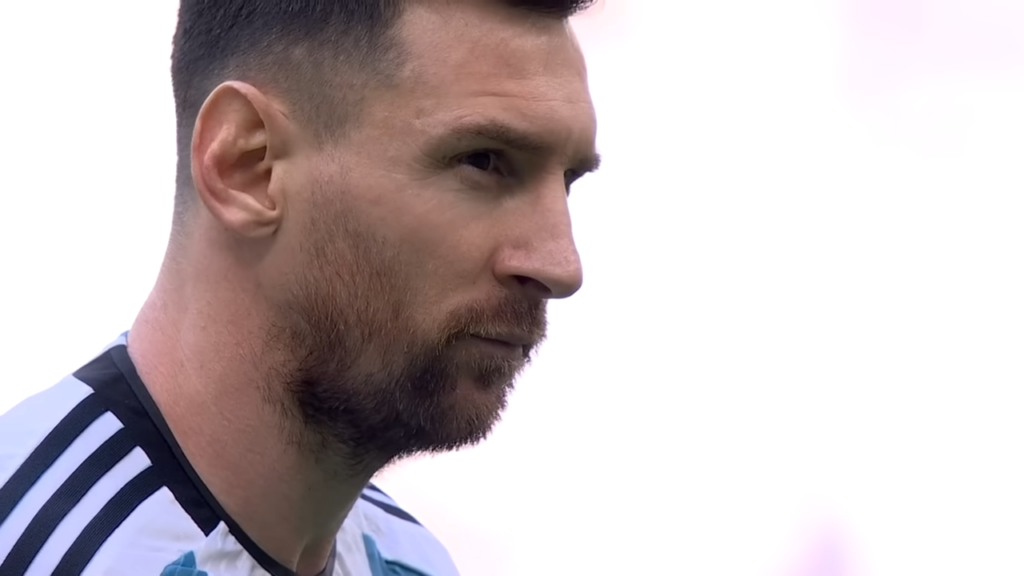
Position: Forward
Summary: Messi’s World Cup story took sixteen years to resolve. After debuting as an 18-year-old substitute in 2006, he endured near-misses and heartbreak across three more tournaments before finally delivering in 2022, producing arguably the greatest individual final performance in the competition’s history — two goals in regulation, another in extra time, and a converted penalty in the shootout to beat France. The image of him lifting the trophy, at last, closed one of football’s longest-running personal narratives. He then extended his legacy further still, becoming the tournament’s all-time leading scorer in 2026, a record that had seemed destined to belong to Klose indefinitely.
Interesting Facts
- Messi cried on the pitch after finally lifting the World Cup trophy, an image that circulated worldwide as the culmination of one of football’s longest personal narratives.
- Messi moved to Spain at 13 for a growth hormone treatment he couldn’t afford in Argentina. Barcelona agreed to pay for his medical treatment as part of signing him, a deal reportedly written on a napkin because the club wanted to lock in the agreement immediately.
- At the 2026 World Cup, at age 38, Messi surpassed Klose’s 16-goal record and became the World Cup’s all-time leading scorer, while also becoming the first player to score in six different tournaments.
Kylian Mbappé (France) – “Mobuto”
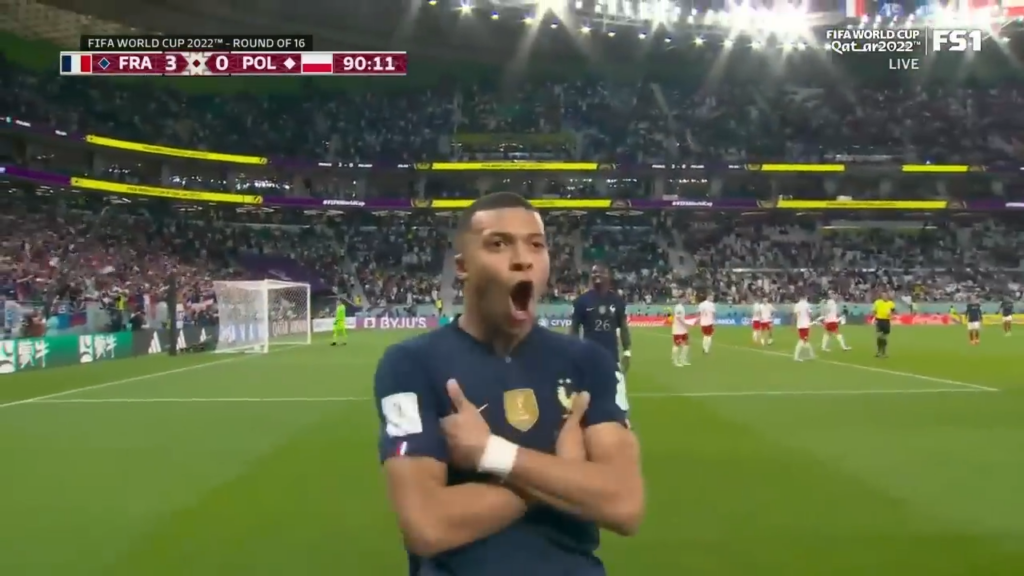
Position: Forward
Summary: Mbappé announced himself as a 19-year-old in 2018, becoming only the second teenager to score in a World Cup final after Pelé. Four years later, he produced one of the great individual performances in a losing effort, scoring a hat-trick in the 2022 final against Argentina — only the second in World Cup final history — yet still finishing on the wrong side of a penalty shootout. His eight goals that tournament won him the Golden Boot regardless. Still only in his late twenties, Mbappé has continued adding to his tally into the 2026 World Cup, positioning himself among the very best to have ever played the competition, with more chapters almost certainly still to come.
Interesting Facts
- Mbappe’s father is originally from Cameroon and his mother is of Algerian descent — either country was a possible national team option — but Mbappé, born and raised in France, chose Les Bleus.
- His signature goal celebration was copied from his little brother. The arms-folded, hands-tucked-under-the-armpits pose was inspired by younger brother Ethan, who used to celebrate that way after beating Kylian at FIFA video games.
- Mbappe shares a World Cup knockout-goals record with Ronaldo Nazário. Mbappé holds the joint record for most goals scored in World Cup knockout matches (round of 16 through the final) — eight — level with the Brazilian great.