You know the feeling before you know the name of it — that specific ache that shows up when you drive past a parking lot that used to be something else, something loud and lit up and full of people you loved sitting beside you. Maybe the place had a name you said a thousand times without thinking about it — Tiger Stadium, Three Rivers, the Vet, the old Boston Garden, the Kingdome — a name that meant something different to you than it ever could to a stranger.
You don’t need to remember every detail to feel it. You don’t need the exact score, or the name of every player who ever ran across that field, because that was never really what you were holding onto anyway. What you were holding onto was easier and harder than that — it was a feeling, a place where you became a version of yourself that showed up nowhere else. That place may be gone now, imploded in under a minute, hauled away as rubble, paved over into a parking lot for the shinier building that replaced it. But you get to keep what it gave you, and nothing about its disappearance changes that. This article explores five stadiums and arenas that aren’t standing anymore, but nevertheless carry tribute inside of the heartbeats of every fan who experienced them.
Tiger Stadium — The Corner of Michigan and Trumbull
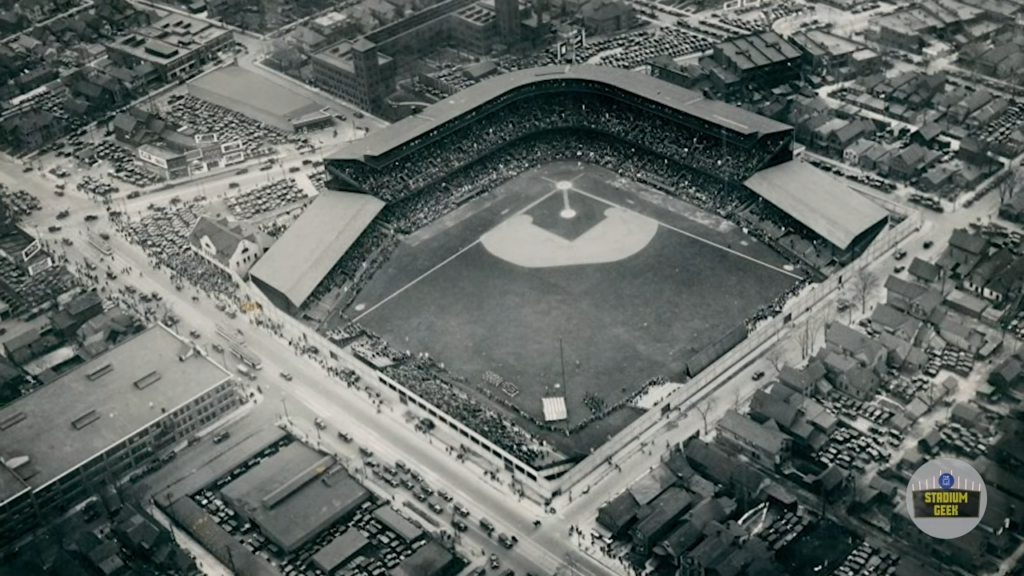
There’s a specific quirk of it worth sitting with before anything else: Tiger Stadium’s home plate sat at a corner where two street names crossed, Michigan and Trumbull, in a neighborhood called Corktown, and baseball had been played on that exact patch of Detroit since 1896, decades before the ballpark most people picture was even built in 1912.
September 27, 1999 is the date to hold onto, even if you weren’t there — the Tigers beating the Royals 8-2, and Robert Fick sending a grand slam into the upper deck for the stadium’s 11,111th and final home run, a number too neat to be anything but real. The stadium sat empty for nearly a decade after that, argued over, half-preserved, half-abandoned, before demolition finally finished in 2009. You’re allowed to feel the specific unfairness of that gap. Nine years of a beloved place just standing there, neither alive nor gone, while everyone decided what to do with it.
Three Rivers Stadium — Where the Rivers Meet
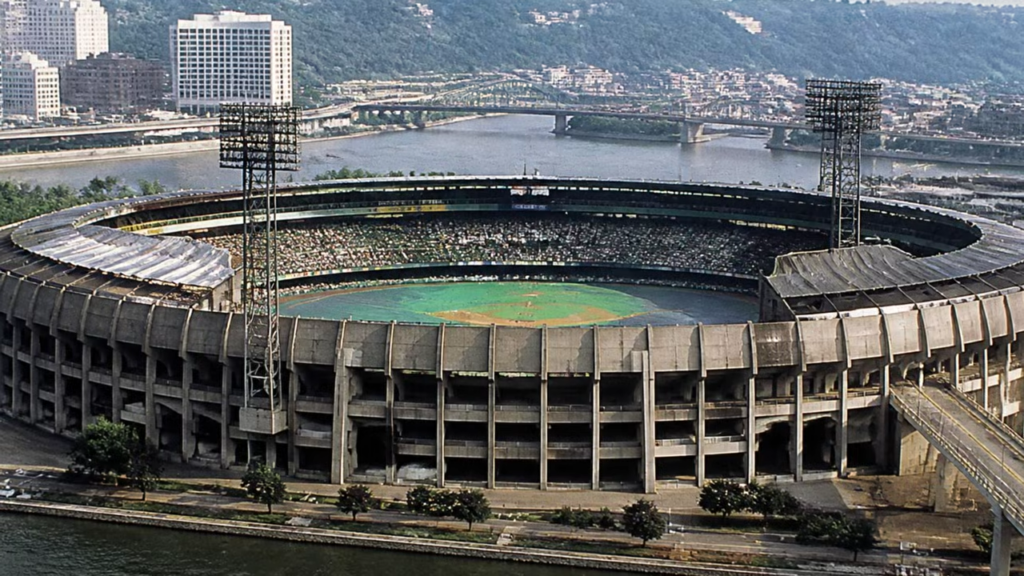
Three Rivers is remembered less for its shape, that circular “cookie-cutter” concrete bowl fans half-affectionately called an ashtray, than for the two moments it happened to hold. On September 30, 1972, Roberto Clemente stood at the plate and got his 3,000th career hit; a number that would become almost unbearably poignant just three months later, when Clemente died in a plane crash on New Year’s Eve. And on December 23, 1972, in the same building, Franco Harris scooped a deflected pass off his shoetops and ran it in for what’s still called the Immaculate Reception, one of the most replayed plays in football history.
You’re allowed to hold both of those in your chest at once — the joy of the catch and the grief of the season after — because that’s what a stadium does that a highlight reel never can: it holds contradictory feelings in the exact same physical space. Three Rivers came down in nineteen seconds on February 11, 2001, with the sunrise on it for the last time, and today the spot is a parking lot beside the ballpark that replaced it.
Veterans Stadium — The Vet
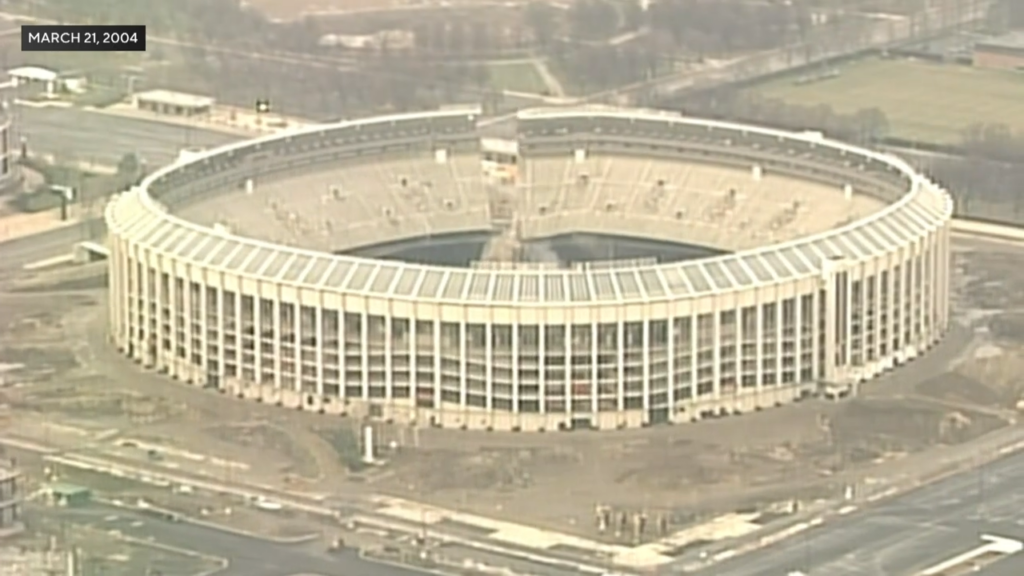
Most people who loved the Vet remember it the same way: fondly, and with a little bit of self-aware humor about how ugly and cold and concrete it really was. It opened April 10, 1971, with the Phillies beating the Expos, and for over three decades it hosted a World Series title in 1980 and an Eagles trip to their first Super Bowl the year after; alongside seven straight losing seasons early on that its fans, to their credit, still showed up for anyway.
When it came time to say goodbye, the city didn’t do it quietly. On March 21, 2004, with the Phillie Phanatic and Phillies legend Greg Luzinski serving as “honorary imploders,” the stadium came down in 62 seconds while a crowd gathered to watch, some of them keeping jars of the dust afterward.
Boston Garden — Sixty-Seven Years Over the North Station Tracks
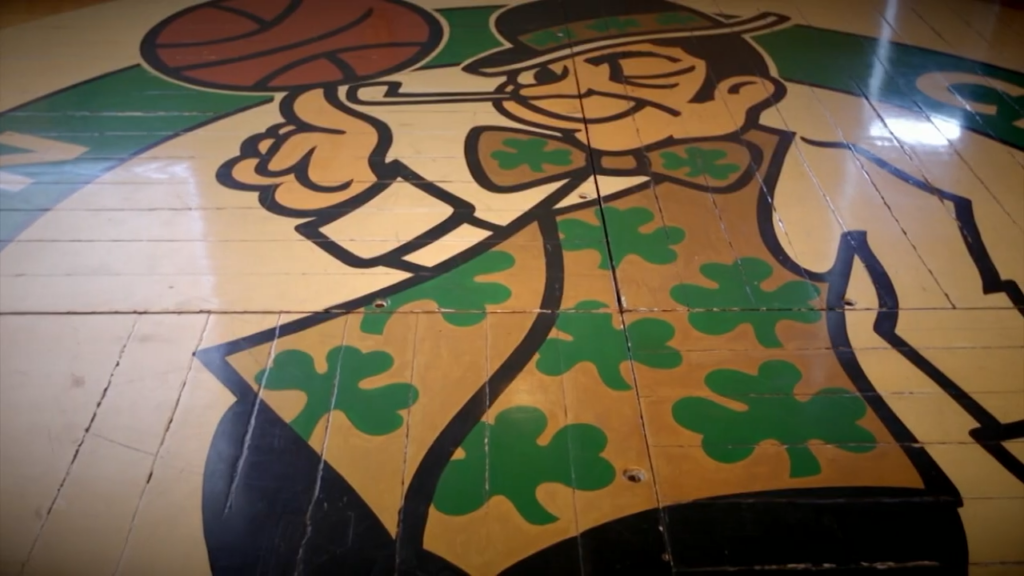
The old Boston Garden is remembered less for what it looked like — it had, famously, obstructed-view seats and no air conditioning for most of its life — and more for what happened under its low ceiling. It opened November 17, 1928, and by the time it closed, it had hosted Celtics championship banners and Bruins Stanley Cups, Bobby Orr’s diving Cup-winning goal in 1970, and, on more ordinary nights, everything from boxing matches to political rallies to a young senator named John F. Kennedy.
The Bruins played the building’s true final game on September 26, 1995, an exhibition against Montreal, and afterward the retired numbers and championship banners were taken down from the rafters in a ceremony that made the ending feel less like a demolition notice and more like a wake. The Garden stood empty for three more years before it finally came down in 1998.
The Kingdome — Twenty-Four Years Under One Concrete Roof
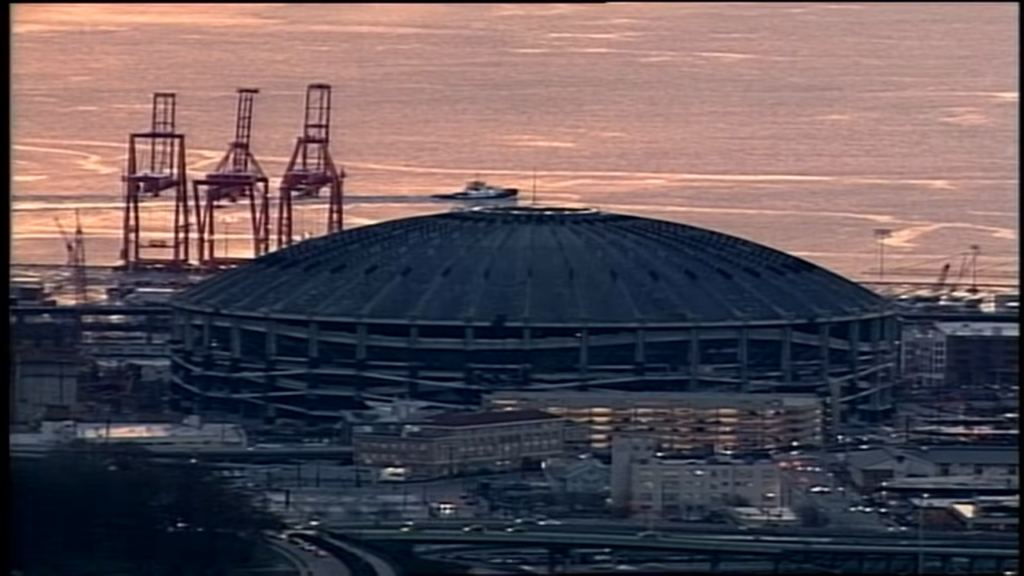
The sound is the thing to remember first: that flat, amplified roar bouncing off a 660-foot concrete dome that made every crowd sound bigger than it actually was. It opened in Seattle in March 1976 and, in the span of one building, hosted the Seahawks, the Mariners, and the SuperSonics, serving as one of the most prominent stadiums and arenas in America.
On March 26, 2000, almost exactly twenty-four years after it opened, the Kingdome came down in 16.8 seconds, the largest building ever demolished by implosion, and the shockwave registered as a small earthquake on local seismographs. Thousands of people lined the hills and waterfront to watch it happen, some of them cheering, some of them quiet, most of them probably feeling both at once.