Among the collaborative arts that constitute cinema, none exerts a more subterranean influence than the musical score. Movie scores operates beneath conscious attention, shaping emotional response before the viewer registers that a decision has been made on their behalf. A sequence of images acquires dread, exaltation, or melancholy according to what accompanies it.
This survey addresses individual films whose movie scores have proven most consequential, identifying in each case the specific technical innovation introduced and the subsequent practice it established. The organizing principle is legacy rather than mere popularity: each entry examines what a given score made possible for the composers who followed. Arrangement proceeds chronologically, though influence rarely respects chronology, and several works exerted their greatest effect decades after release. The selection privileges movie scores whose principal themes have detached from their source films entirely, achieving recognition among audiences who may never have seen the pictures.
Such migration constitutes the clearest evidence of iconicity, and it is treated here as a measurable outcome rather than a vague honorific. What follows is not exhaustive; the discipline has produced far too much of merit for any single treatment to encompass. It is instead a structured account of the landmarks and the specific inheritances they left behind. The following constitute some of the influential movie scores of all-time, ones achieving resonance for outside the domain of the film they’re associated with.
King Kong (1933) and Gone with the Wind (1939)
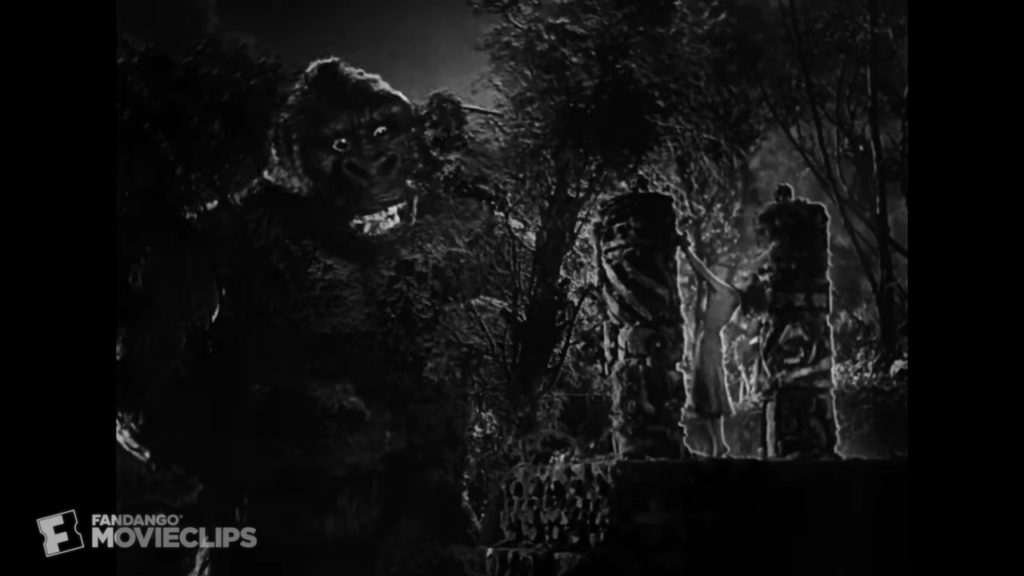
Establishing the foundations of narrative scoring, Max Steiner demonstrated with King Kong that orchestral music could sustain an entire feature rather than punctuate it intermittently. Prior practice had treated music as incidental. Steiner scored roughly three-quarters of the film continuously, assigning motifs to the ape, the island, and the heroine.
Legacy: The through-composed feature movie score became studio standard within five years. Every subsequent Hollywood picture assumed continuous musical accompaniment as a default condition rather than an occasional flourish. Gone with the Wind extended the achievement commercially, producing Tara’s Theme, among the first film melodies to enter general circulation as sheet music and radio repertoire.
The Adventures of Robin Hood (1938)
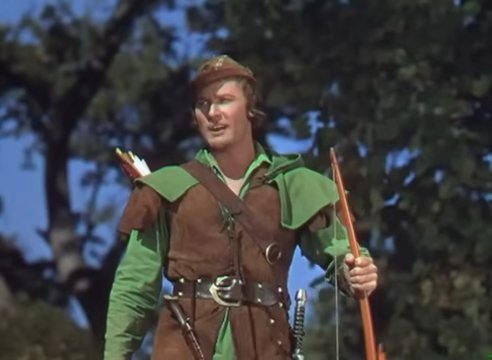
Applying operatic technique to popular adventure, Erich Wolfgang Korngold constructed a full leitmotif system inherited from Wagner, assigning musical identities to characters and dramatic situations and developing them across the picture.
Legacy: The heroic adventure template Korngold established remains largely intact. John Williams has repeatedly identified Korngold as the direct antecedent for Star Wars, and the brass-forward fanfare vocabulary of contemporary superhero scoring descends from this film without significant modification.
Psycho (1960)
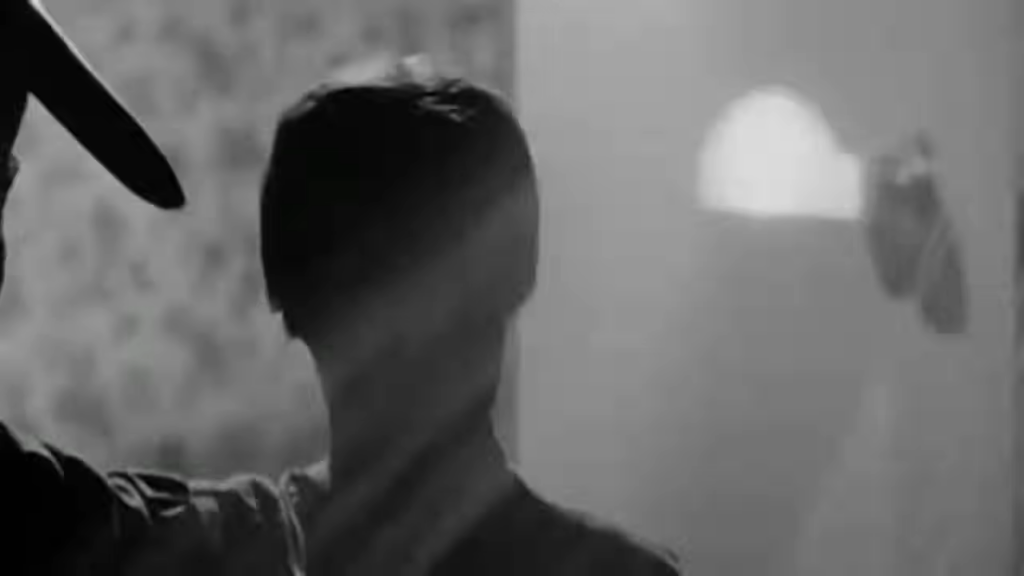
Rejecting the lushness of his contemporaries, Bernard Herrmann scored Psycho for strings alone, matching the film’s monochrome photography with a deliberately monochrome orchestra. The shrieking glissandi accompanying the shower sequence were achieved through violins played at extreme registers.
Legacy: Herrmann proved that restriction generates more terror than abundance. The horror genre abandoned full orchestration for decades afterward, and the high-register string shriek became a permanent fixture of suspense scoring, quoted or imitated in hundreds of subsequent films. Vertigo, from 1958, contributed a parallel inheritance: its spiraling harmonic structures established that a score could depict psychological state rather than external action.
The Good, the Bad and the Ugly (1966)
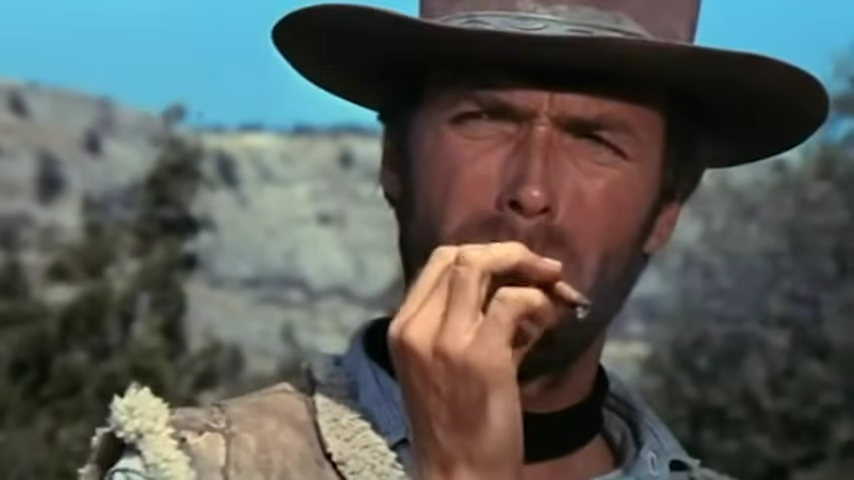
Departing entirely from orchestral convention, Ennio Morricone built his main theme on a two-note vocal motif imitating a coyote’s call, supplemented by electric guitar, whistling, gunshots, and ocarina. The instrumentation had no precedent in dramatic scoring.
Legacy: Morricone legitimized non-orchestral and non-musical sound as primary score material. The film’s theme achieved recognition far beyond the Western genre, and the film’s climactic three-way standoff, scored with the sustained cue known as The Ecstasy of Gold, became the template for musically-driven set pieces. Once Upon a Time in the West, two years later, extended the method by assigning each character a distinct instrumental voice, a technique later adopted wholesale by Howard Shore.
The Godfather (1972)
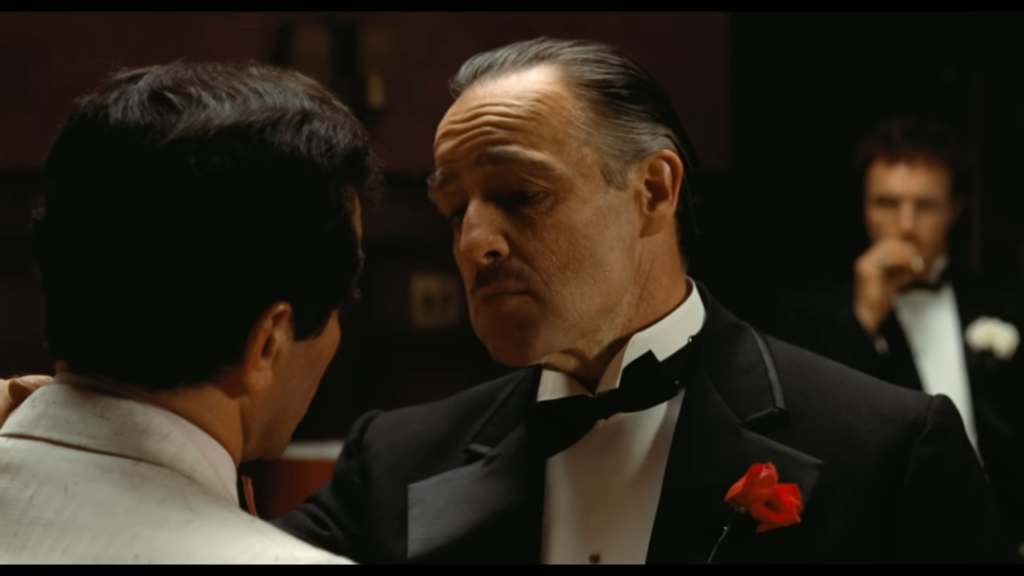
Reducing an epic crime narrative to a single plaintive trumpet melody over waltz accompaniment, Nino Rota inverted expectations regarding scale. The subject matter invited grandeur; the score supplied intimacy and nostalgia instead.
Legacy: Rota’s theme now functions as an independent cultural signifier, invoked in contexts entirely unrelated to the film. The score established ironic understatement as a viable approach to violent material, an inheritance visible in subsequent crime cinema across several decades.
The Pink Panther (1963)

Scoring a caper comedy for tenor saxophone over walking bass, Henry Mancini imported jazz vocabulary into mainstream dramatic scoring at a moment when the idiom remained largely confined to crime pictures. His earlier Breakfast at Tiffany’s had already produced Moon River, which won both the Academy Award and broad popular circulation.
Legacy: Mancini’s theme has outlived most of the films it served and now operates as generic shorthand for stealth and comic conspiracy. More consequentially, he normalized the small jazz ensemble as an alternative to full orchestra, expanding the range of textures available to composers working outside epic subject matter.
Jaws (1975)

Achieving its effect through extreme reduction, John Williams movie score signaled the shark’s presence with two alternating semitones in the low strings. The motif proved sufficiently effective that the film could withhold the creature itself for most of its running time, a necessity given the repeated failures of its animatronic antagonist, a stunning accomplishment within the pantheon of movie scores.
Legacy: Jaws demonstrated that a two-note figure could substitute for visible threat entirely. Spielberg has credited the score with rescuing the production. The principle it established, that the unseen scored menace exceeds the seen one, has governed suspense construction ever since.
Star Wars (1977)
Reversing the minimalist current of its decade, Williams constructed a comprehensive Wagnerian leitmotif system for Star Wars, assigning themes to characters, factions, and abstractions, then combining and developing them across the film and its sequels.
Legacy: The symphonic film score, widely considered obsolete by the mid-1970s, was restored to dominance essentially overnight. The soundtrack album became among the best-selling instrumental recordings ever released. The Imperial March, introduced in The Empire Strikes Back, has become universal shorthand for menacing authority. Nearly every franchise score composed since operates within the system Williams reestablished here. It likely remains one of the most seminal movie scores of all-time.
Blade Runner (1982)
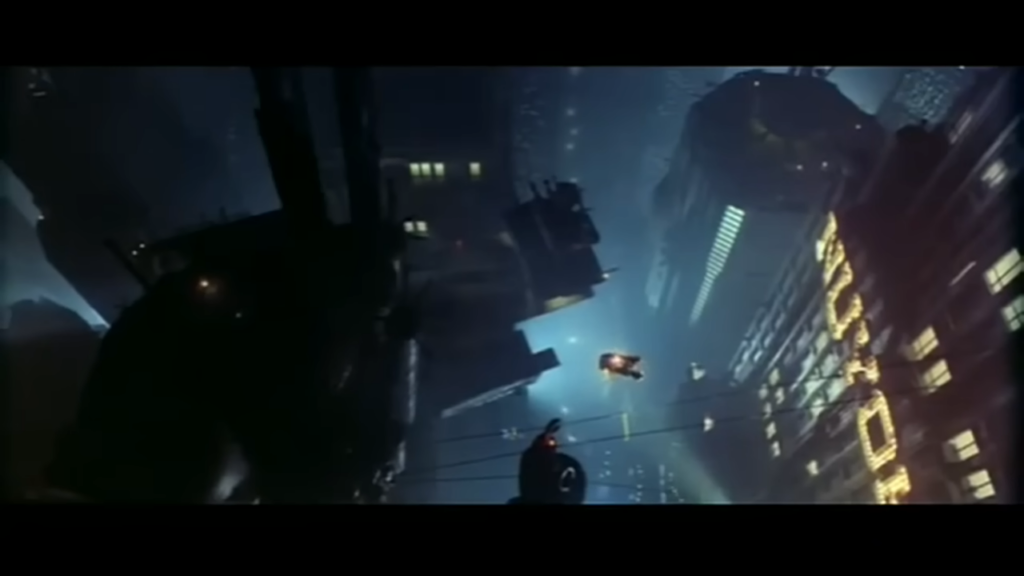
Constructing an entirely electronic soundscape, Vangelis blended synthesized textures with saxophone and processed percussion, producing atmosphere rather than melody across long passages.
Legacy: The film defined the sonic identity of science fiction for a generation. Contemporary ambient and synthwave scoring descends directly from it, and the score’s influence expanded substantially after the film’s critical reassessment in the 1990s. Chariots of Fire, released the previous year, contributed a separate legacy: its theme became inseparably attached to athletic slow motion in popular usage.
Schindler’s List (1993)
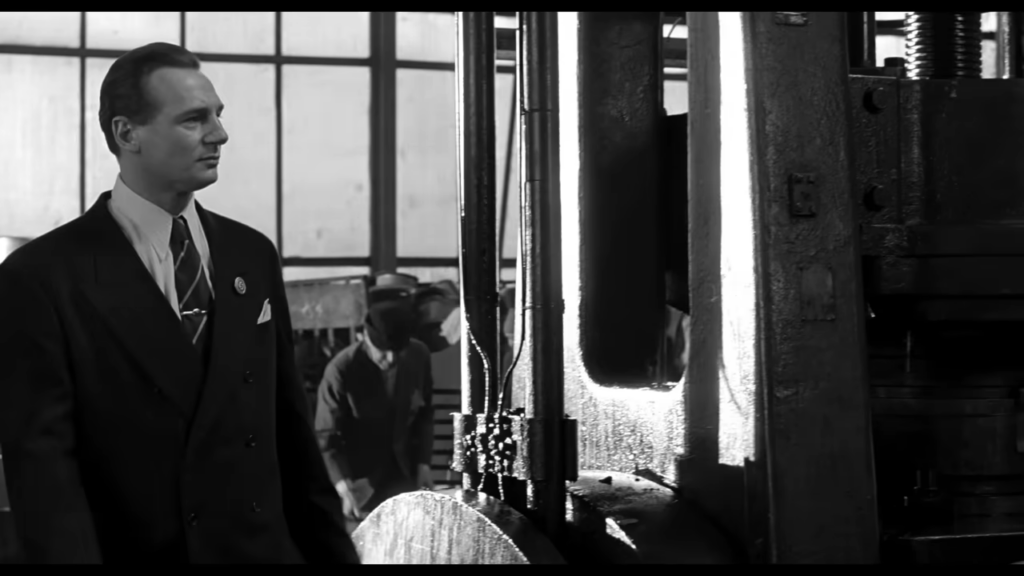
Departing sharply from his adventure idiom, Williams centered the score on a solo violin line of restrained grief, performed by Itzhak Perlman, and permitted extended sequences to proceed without accompaniment.
Legacy: The score established that historical atrocity required musical restraint rather than orchestral lament. Subsequent films addressing comparable subject matter have overwhelmingly followed this model, favoring solo instrumental writing over massed forces.
Gladiator (2000)
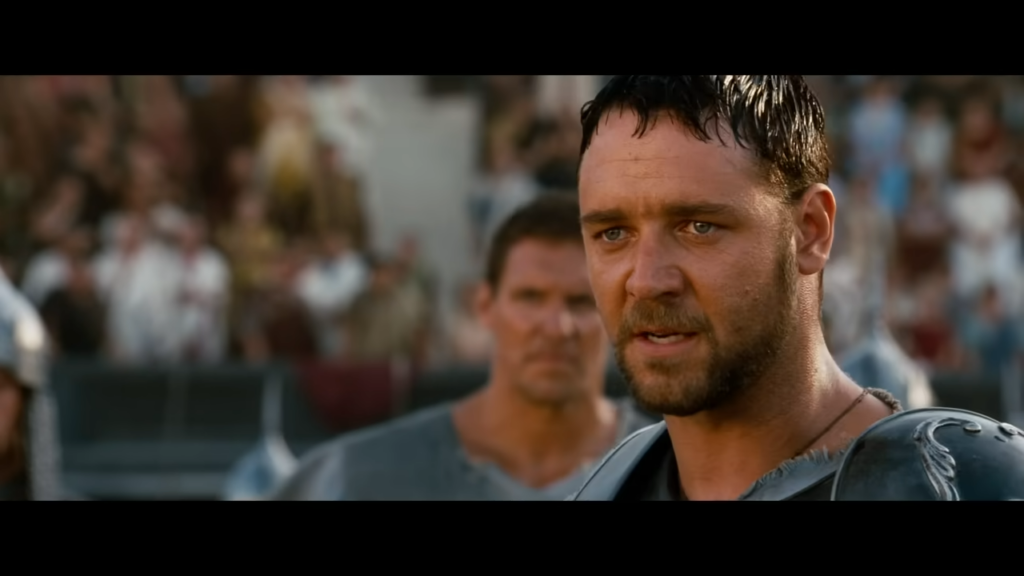
Combining ancient-sounding vocal lines from Lisa Gerrard with contemporary percussion and layered synthesizers integrated into orchestra, Hans Zimmer produced a hybrid idiom with no clear precedent.
Legacy: The Zimmer method, emphasizing rhythmic propulsion and harmonic simplicity deployed at volume, became the dominant commercial approach of the following two decades. The wordless female vocal over percussion has been imitated in historical epics continuously since.
The Lord of the Rings (2001-2003)

Constructing a leitmotif system encompassing dozens of themes across roughly eleven hours of film for Lord of the Rings, Howard Shore assigned distinct musical cultures to each civilization in the narrative, employing period instruments and choral writing in invented languages.
Legacy: Shore demonstrated that leitmotif technique could sustain coherence across a trilogy rather than a single feature. The score remains the most frequently cited example of long-form thematic development in the medium and established the expectation that franchise scoring maintain internal consistency across installments.
The Dark Knight (2008) and Inception (2010)
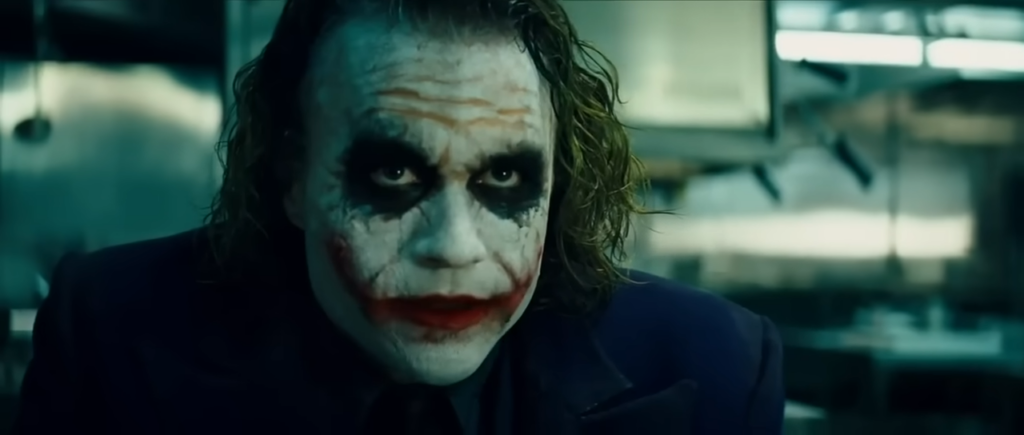
Reducing the Joker’s theme to a single sustained and gradually rising cello note, Zimmer and James Newton Howard generated discomfort through duration rather than melodic content. Inception subsequently introduced a drastically slowed fragment of an Édith Piaf recording, expanded into vast brass declamations.
Legacy: The Inception brass technique reshaped trailer music industry-wide and has been imitated so extensively that it now constitutes a recognizable idiom independent of the film. The sustained-tension cue from The Dark Knight established that a score need not contain a theme at all to be effective.
Up (2009) and Spirited Away (2001)

Demonstrating the animated feature’s capacity for compression, Michael Giacchino, one of the most emotional movies scores in cinematic history, conveyed an entire marriage across a four-minute dialogue-free montage using variations on a single waltz theme. Joe Hisaishi, scoring for Hayao Miyazaki, pursued the opposite discipline, favoring spare piano writing and permitting sequences to proceed in silence where Western convention insisted on accompaniment.
Legacy: Both are routinely cited as evidence that film music can carry narrative weight independently of speech. Hisaishi’s restraint has been particularly influential among contemporary composers seeking alternatives to continuous scoring.