Interested in cookout recipes for Labor Day? Labor Day, observed annually on the first Monday of September, marks the unofficial close of the American summer grilling season and, with it, the final major cookout occasion before autumn menus take over. First recognized as a federal holiday in 1894, it has evolved over more than a century into a culinary tradition as much as a civic one, anchored by a consistent roster of dishes that appear on backyard tables from coast to coast with remarkable regularity.
This entry surveys seven classic labor day cookout recipes: hamburgers, barbecue ribs, grilled corn on the cob, classic potato salad, coleslaw, baked beans, and a fruit-forward summer dessert, each selected for its historical persistence and near-universal presence at American Labor Day gatherings. Every recipe below includes standard preparation methods, typical ingredient ratios, and relevant technique notes drawn from established culinary convention rather than regional variation, since regional interpretations of these dishes number in the dozens and a comprehensive survey of each falls outside the scope of a single reference entry. Quantities are generally calibrated to serve six to eight people and can be scaled proportionally for larger gatherings.
Hamburgers
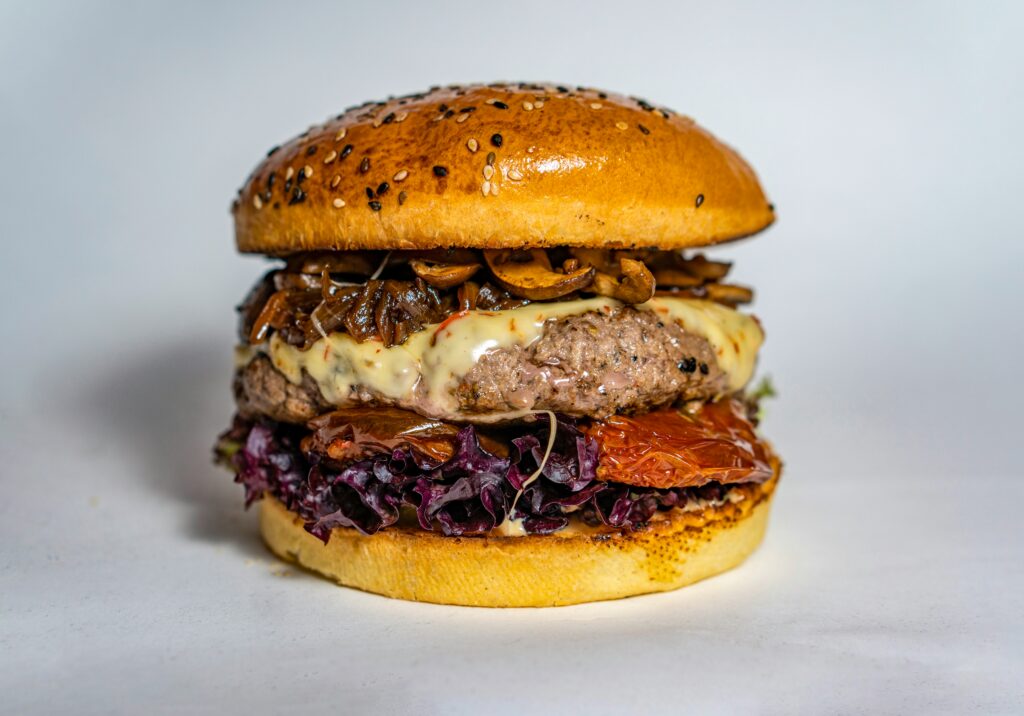
The hamburger’s precise American origin remains disputed among food historians, with competing claims tracing its popularization to late-nineteenth-century fairs and lunch counters in Wisconsin, Texas, and Connecticut. Regardless of origin, the standard cookout preparation calls for ground beef with a fat content between 15 and 20 percent, generally labeled 80/20, since higher fat ratios retain moisture better under direct grill heat than leaner blends. Patties are typically formed to a diameter slightly larger than the bun, roughly four to five ounces each, with a thumb-pressed center indentation to counteract the natural doming that occurs during cooking.
Grilling over direct medium-high heat, generally 375 to 400 degrees Fahrenheit, produces a patty cooked to medium doneness in approximately four minutes per side, reaching an internal temperature of 160 degrees Fahrenheit as recommended by USDA guidelines for ground beef. Cheese, when included, is typically added during the final minute of cooking with the grill lid closed to promote even melting. Standard accompaniments include lettuce, tomato, onion, and a condiment trio of ketchup, mustard, and mayonnaise, though pickle and specialty sauce additions vary considerably by household and region.
Barbecue Ribs
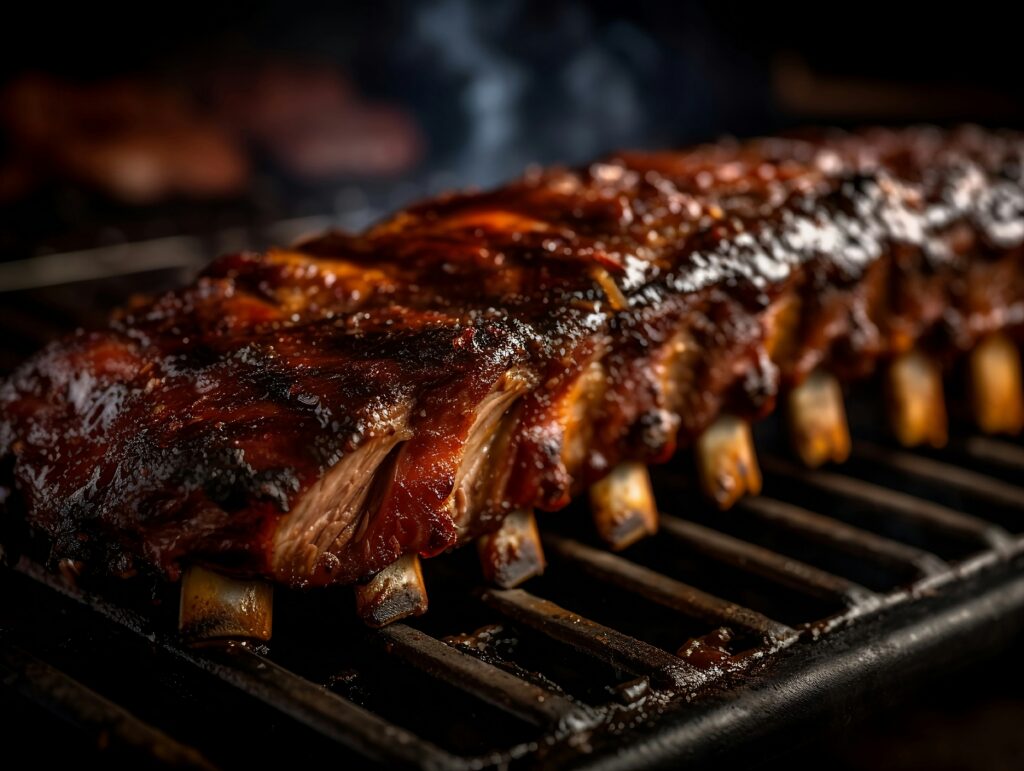
Barbecue ribs fall into two primary cuts for cookout purposes: baby back ribs, taken from the upper rib cage near the spine, and spare ribs, cut from the lower belly area and generally larger and fattier. Preparation conventionally begins with removal of the thin membrane on the bone side, a step that allows seasoning penetration and prevents the rack from curling during cooking. A dry rub of paprika, brown sugar, garlic powder, and black pepper is applied several hours or overnight in advance for optimal flavor development.
Cooking method varies by regional tradition, with low-and-slow indirect grilling at 225 to 250 degrees Fahrenheit for four to six hours representing the most widely practiced approach outside of dedicated smoking equipment. The “3-2-1 method” — three hours unwrapped, two hours wrapped in foil, one hour unwrapped again with sauce applied — is a commonly cited technique for achieving tender, fall-off-the-bone results without specialized smoking apparatus. Barbecue sauce style differs sharply by region: tomato-and-molasses-based sauces predominate in Kansas City and much of the Midwest, vinegar-and-pepper sauces are standard in eastern North Carolina, and mustard-based sauce remains a defining feature of South Carolina barbecue tradition.
Grilled Corn on the Cob
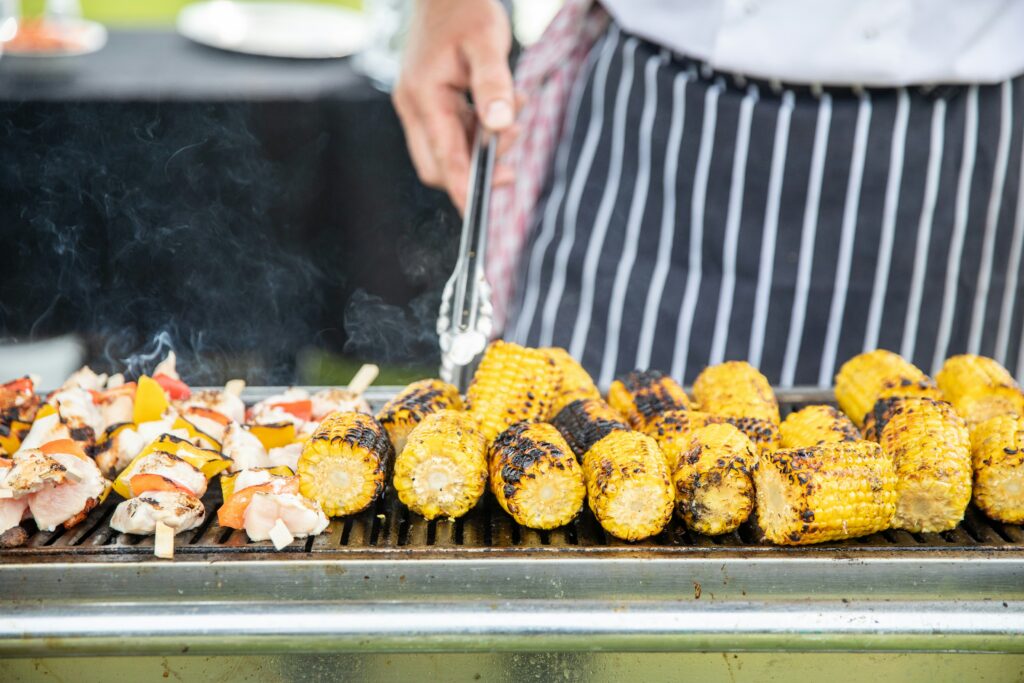
Corn on the cob appears at Labor Day gatherings via three principal preparation methods: husk-on grilling, husk-removed direct grilling, and foil-wrapped grilling. The husk-on method involves soaking unshucked ears in water for 15 to 20 minutes prior to grilling, which steams the kernels from within while the husk chars over 15 to 20 minutes of turning on medium heat. Husk-removed grilling produces more pronounced char marks and a smokier flavor profile, requiring roughly 10 to 12 minutes of direct-heat grilling with regular quarter-turns.
Standard finishing involves butter, salt, and black pepper, though regional and internationally influenced variations — cotija cheese and chili powder in Mexican-style elote preparations, for instance — have become increasingly common at American cookouts in recent decades. Corn selection typically favors ears with bright green, tightly wrapped husks and moist, golden silk, indicators of freshness that directly affect kernel sweetness and moisture retention during cooking.
Classic Potato Salad
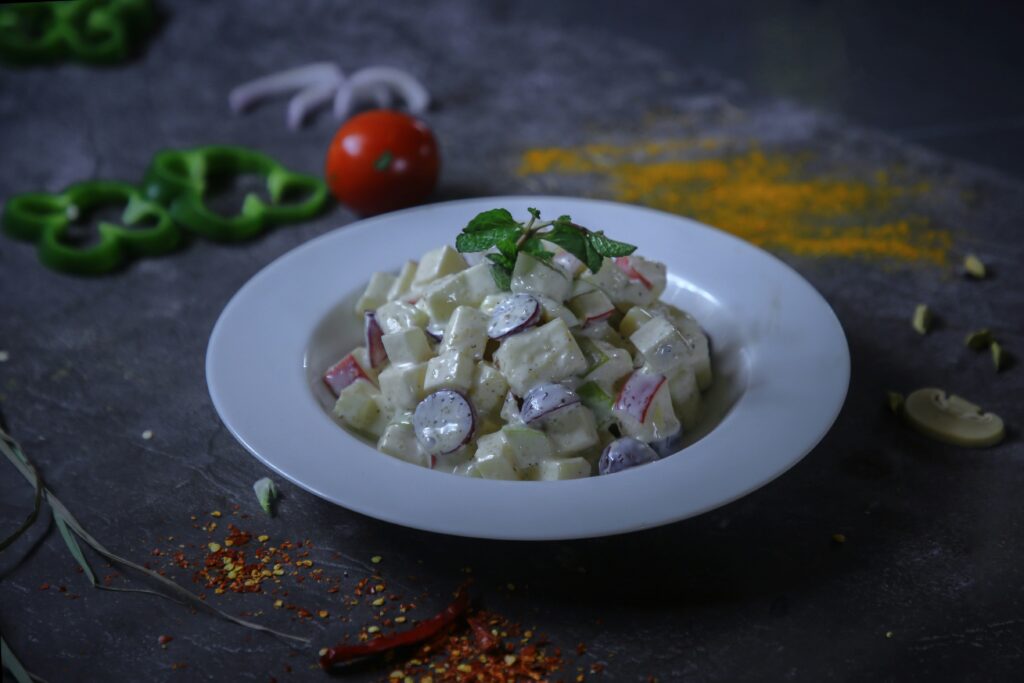
American potato salad traces its lineage to German and Central European immigrant communities of the nineteenth century, though the mayonnaise-based version now standard at Labor Day cookouts diverges considerably from its vinegar-based European predecessors. Preparation begins with boiling waxy potato varieties, most commonly Yukon Gold or red potatoes, which hold their shape better than starchy varieties like Russets during the mixing process. Potatoes are boiled whole or halved until fork-tender, generally 15 to 20 minutes, then cooled before cutting to prevent excessive breakdown.
The standard dressing combines mayonnaise, yellow mustard, chopped celery, diced onion, and hard-boiled eggs, seasoned with salt, pepper, and paprika. Ratios vary by household, though a common baseline calls for approximately one cup of mayonnaise per three pounds of potatoes. Regional variations include German-style hot potato salad, which substitutes a bacon-and-vinegar dressing for mayonnaise, and mustard-forward Southern variations that reduce mayonnaise in favor of additional mustard and pickle relish.
Coleslaw
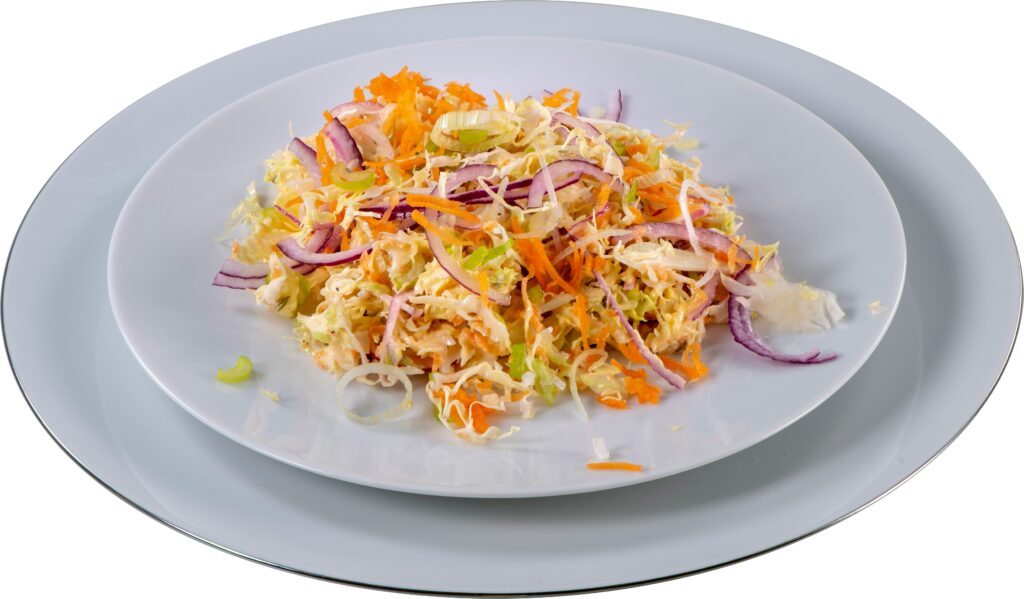
Coleslaw derives its name from the Dutch term “koolsla,” meaning cabbage salad, reflecting its origins among Dutch settlers in colonial-era New York. Two dominant preparation styles exist: creamy, mayonnaise-based coleslaw, most common in the American South and Midwest, and vinegar-based coleslaw, prevalent in parts of the Carolinas and often served specifically alongside barbecue. Standard preparation involves thinly shredded green cabbage, often combined with shredded carrot, tossed with the chosen dressing at least 30 minutes before serving to allow flavors to meld and cabbage to soften slightly.
Creamy versions typically combine mayonnaise, apple cider vinegar, sugar, celery seed, salt, and pepper in proportions adjustable to taste, while vinegar-based versions rely on a heated combination of vinegar, sugar, and oil poured over shredded cabbage while still warm. Both versions benefit from refrigeration of at least one hour prior to serving, as this resting period allows the cabbage to absorb dressing and reduces the sharp, raw bite characteristic of freshly cut cabbage.
Baked Beans
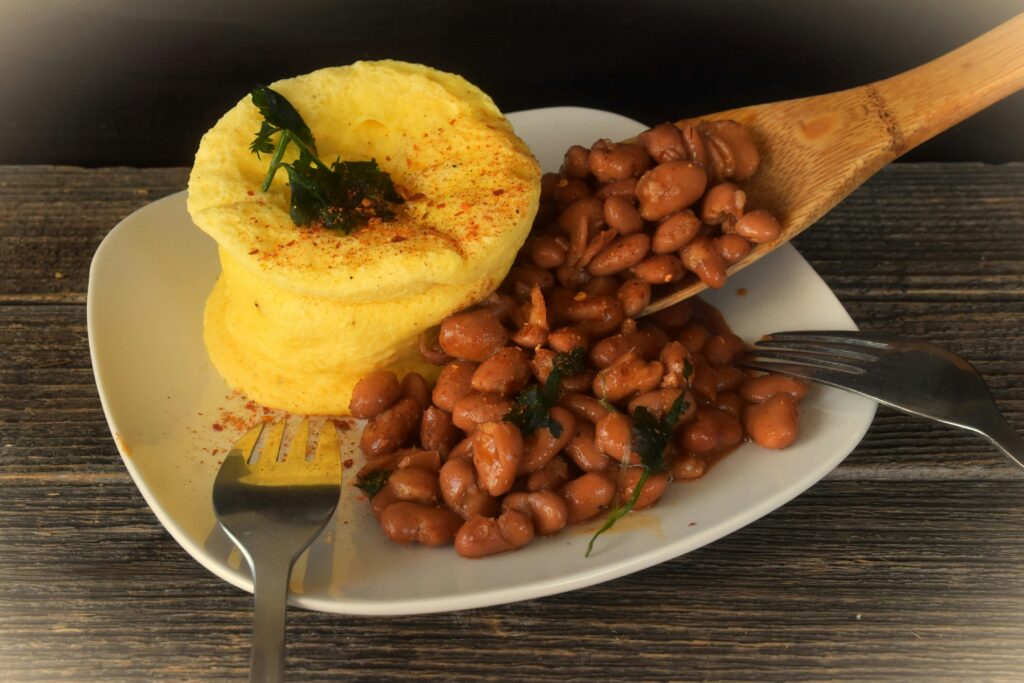
Among the allotment of Labor Day cookout recipes, baked beans occupy a central spot, rooted in a culinary tradition dating to colonial New England, where slow-cooked bean dishes were prepared communally and left to cook overnight, a practice with documented ties to Native American cooking methods later adapted by English settlers. Contemporary cookout versions typically begin with canned navy or great northern beans as a time-saving substitute for dried beans requiring overnight soaking, though from-scratch preparations using dried beans remain common among traditionalists.
Standard preparation combines beans with brown sugar, molasses, ketchup or barbecue sauce, diced onion, and bacon or salt pork, baked uncovered at 350 degrees Fahrenheit for 45 minutes to an hour until the sauce thickens and reduces. Boston-style baked beans emphasize molasses as the primary sweetener, reflecting the dish’s New England origins, while Southern and Southwestern variations frequently incorporate barbecue sauce, jalapeños, or additional smoked meats.
Summer Fruit Dessert
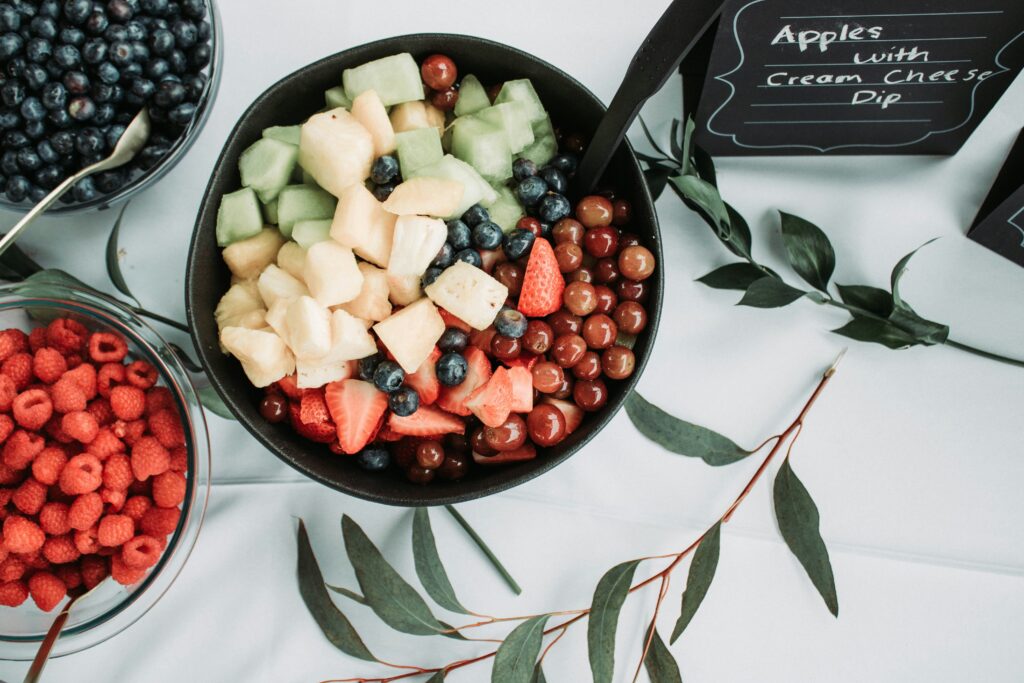
Fruit-based desserts, not particularly those built around peaches, berries, or watermelon — one of several cookout recipes disassociated with a traditional BBQ — close out the traditional Labor Day menu, reflecting the peak late-summer availability of these fruits across most of the continental United States. Peach cobbler remains among the most commonly served options, prepared by combining sliced peaches with sugar, cinnamon, and a small amount of cornstarch or flour as a thickener, topped with a biscuit-style batter and baked at 375 degrees Fahrenheit for 35 to 45 minutes until the topping is golden brown.
Berry-based alternatives, including mixed-berry crisps topped with an oat-and-brown-sugar streusel, follow a similar preparation logic and baking temperature range. Watermelon, requiring no cooking at all, frequently appears simply sliced or cubed, occasionally paired with feta cheese and mint in a savory-sweet preparation that has gained popularity at American cookouts over the past two decades.