Whether you count down the days with an advent calendar, binge every holiday movie on your watchlist, or simply enjoy the extra twinkle in city streets, Christmas has a way of showing up in your life—whether you celebrate it or not. It’s in the music that suddenly takes over every shop, the sales that flood your inbox, the decorations that transform ordinary places into glowing winter scenes. But beneath the familiar carols and colorful lights lies a surprisingly strange and fascinating story: Christmas, as we know it, is a patchwork of centuries-old traditions, myths, marketing genius, and cultural mashups from all over the world.
You might think you already “know” Christmas: trees, Santa, presents, maybe a family dinner that’s either heartwarming or mildly chaotic. Yet many of the things we consider classic Christmas traditions are actually quite new—or borrowed from unexpected places. Why do we bring trees indoors and cover them with lights? How did a Turkish bishop evolve into a jolly man in a red suit? And how did a religious celebration become one of the most powerful engines of modern consumer culture, shaping the way we spend, gather, and even feel at the end of each year?
As you read on, you’ll explore unexpected origins, cultural twists from around the globe, and hidden meanings tucked behind common symbols of the season. In this article, we’ll explore several interesting facts about Christmas, revealing further the origins of the holiday.
Origins of Santa Claus

The universally beloved character of Santa Claus is a colorful fusion of history and legend, primarily descending from the 4th-century Turkish bishop, Saint Nicholas. Known for his anonymous generosity—including giving gold that supposedly landed in stockings hung to dry—Nicholas’s story was brought to the American colonies by Dutch settlers, where his nickname Sinterklaas evolved into Santa Claus. This gift-giving figure later absorbed aspects from European folklore, such as the Norse god Odin’s winter ride and the English Father Christmas. The modern, iconic image of a jolly man in a red suit riding a sleigh with flying reindeer was largely crystallized in 19th-century American pop culture through poems like “A Visit from St. Nicholas” and illustrations by cartoonist Thomas Nast.
A Deutsche Christmas Tree? – Interesting Facts About Christmas

The tradition of the Christmas tree, a potent symbol of enduring life during winter, has roots in ancient pagan practices, but its widespread adoption is directly attributable to Germany. The custom evolved from medieval German “Paradise Trees,” which were firs decorated with apples to symbolize the Garden of Eden. The definitive version emerged in 16th-century German homes, reputedly popularized by Martin Luther, who supposedly added lit candles to mimic the starlit sky. The tradition was firmly established globally when German immigrants brought it to the U.S., and especially when Prince Albert, the German husband of Queen Victoria, introduced it to the British Royal Family in the 1840s, spreading the festive, decorated evergreen into homes worldwide.
Marketing Rudolph
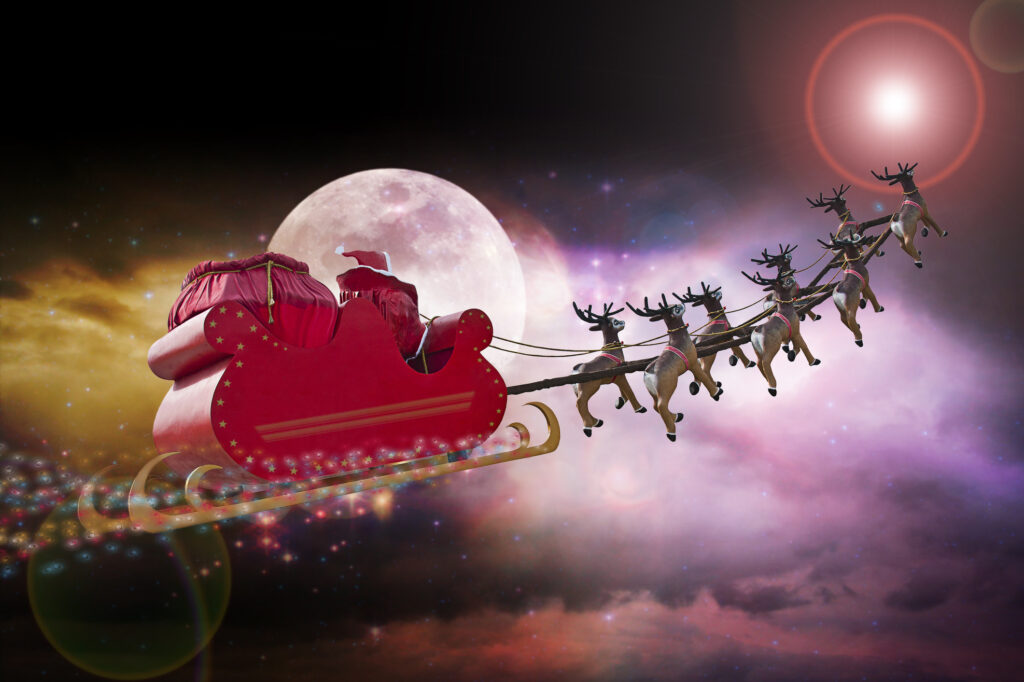
The famous character Rudolph the Red-Nosed Reindeer has a surprisingly recent and commercial origin, having been created in 1939 by Robert L. May, a copywriter for the Montgomery Ward department store. May was tasked with developing a new character for a free promotional booklet, and, inspired by his own childhood as an outcast and the story of the Ugly Duckling, he conceived of a reindeer whose glowing red nose, initially a source of ridicule, became his greatest asset for guiding Santa’s sleigh through a dense fog. Although the rhyming booklet was popular, Rudolph’s path to global stardom was solidified a decade later when May’s brother-in-law, Johnny Marks, wrote the famous song, turning the story of the misfit reindeer into an uplifting, enduring symbol of Christmas.
Jingle Bells, Jingle Bells – Interesting Facts About Christmas

The cheerful winter anthem “Jingle Bells,” composed by James Lord Pierpont and first published in 1857 under the title “One Horse Open Sleigh,” was surprisingly not intended as a Christmas song. Instead, its lyrics—which make no mention of Christmas—were written to celebrate the popular, sometimes rowdy, New England pastime of sleigh racing, or perhaps for a Thanksgiving service. The “jingle bells” referenced were the functional bells strapped to horses’ harnesses to prevent collisions in the snow, a sound Pierpont immortalized. Though it took decades to become firmly linked to Christmas, the song achieved worldwide fame, even holding the unique distinction of being the first song ever broadcast from space in 1965 by U.S. astronauts.
Cultural Interpretations of Santa Claus
Iceland: Iceland’s version of Santa Claus is not a single figure, but a group of 13 mischievous troll brothers called the Yule Lads (Jólasveinar), who descend from the mountains one by one on the 13 nights before Christmas. Each Lad, known for a unique prank like Spoon-Licker or Door-Slammer, leaves gifts or a rotten potato in children’s shoes placed on the windowsill. The Lads’ folklore is linked to much more terrifying figures: their mother, the ogress Grýla, who hunts naughty children to boil into stew, and the massive Yule Cat, who threatens to devour anyone not wearing new clothes on Christmas Eve.
Italy: Italy celebrates Christmas with a blend of modern and ancient traditions, featuring multiple gift-givers. While the contemporary Babbo Natale (Santa Claus) brings gifts on Christmas Day, the older, more distinct Italian figure is La Befana, a benevolent old woman who flies on a broomstick and delivers treats or lumps of coal to children’s stockings on Epiphany, January 6th. Her legend is tied to her failure to join the Three Wise Men on their journey to find the Baby Jesus, a search she continues today. More central to Italian celebrations than the imported Christmas tree is the Presepe (Nativity Scene), a tradition begun by St. Francis of Assisi in 1223. The entire Italian holiday season is an extended affair, beginning on December 8th and extending through Epiphany, and is marked by significant culinary traditions, like the mandatory meat-free fish feast on Christmas Eve.
Spain: Spain’s central Christmas gift-givers are not Santa Claus, but the Los Reyes Magos (Three Wise Men), who follow the biblical tradition by bringing the main presents on Epiphany, January 6th, the final day of the holiday season. The night before, Spanish children participate in spectacular Cabalgata de Reyes Magos parades, and later prepare their shoes (instead of stockings) to be filled with gifts, or candy coal for the naughty. While the global figure of Papá Noel (Santa) has a minor role, the focus remains on the Kings and other regional figures like the Catalan Tió de Nadal (“Poop Log”). The Spanish holiday season is also defined by the massive El Gordo Christmas lottery on December 22nd and the sharing of the Roscón de Reyes (a ring-shaped cake containing a hidden figurine and a fava bean) on Epiphany.
Christmas Stamp – Interesting Facts About Christmas

The origin of the Christmas stamp is primarily attributed to Canada, which issued a stamp inscribed “XMAS 1898” to commemorate the Imperial Penny Postage rate change. The Christmas connection was solidified through a quick-witted official who claimed the stamp honored the “Prince of Peace” to gain Queen Victoria’s approval. This tradition, later separated from the charitable Christmas Seals invented in Denmark in 1904, eventually spread worldwide. The United States began its popular annual tradition comparatively late, issuing its first Christmas stamp in 1962. Today, many countries, including the U.S., issue dual-themed stamps, a practice designed to appeal to diverse consumers while navigating past controversies about the separation of church and state.
Holiday Songs as Protest Songs?
“O Holy Night”: The beloved Christmas carol “O Holy Night” has a revolutionary past, beginning in France in 1847 where its original authors—a Socialist poet and a composer rumored to be Jewish—led to the song being banned from Catholic churches for decades. It was resurrected in America by the abolitionist minister John Sullivan Dwight, who explicitly translated the lyrics to serve as a protest song against slavery. The powerful third verse, declaring that “Chains shall He break, for the slave is our brother,” made the carol an enduring anthem for freedom in the years leading up to the Civil War. Furthermore, the carol holds the distinction of being the first song ever broadcast over radio airwaves in 1906. This compelling history of resistance and technological firsts makes “O Holy Night” one of the most culturally significant carols in the Christmas canon.
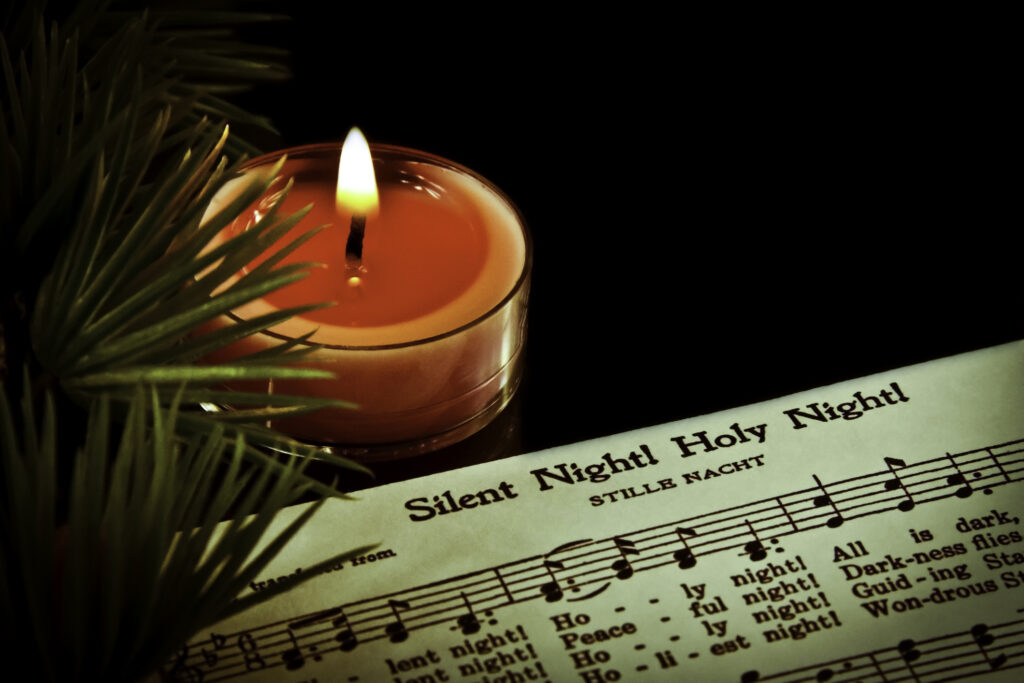
“Silent Night”: The creation of the beloved carol “Silent Night” (Stille Nacht, heilige Nacht) was a simple, necessary act of comfort, written in 1818 by Father Joseph Mohr and composed by Franz Xaver Gruber for guitar accompaniment after the church organ broke. Though born in a time of political unrest following the Napoleonic Wars, the song earned its fame as a powerful, spontaneous protest against war during the Christmas Truce of 1914 in World War I. Along the trenches of the Western Front, German and Allied soldiers ceased fighting, spontaneously emerging to exchange greetings after the Germans began singing the tune in their native language. This common melody, which has since been translated into over 140 languages, allowed enemies to briefly connect as humans, making the song an enduring symbol of peace and hope, and cementing its status as the most recorded Christmas song in history.
Japan/American Cuisine – Interesting Facts About Christmas

Japan’s unique Christmas tradition of eating KFC fried chicken as the festive holiday meal is a modern phenomenon stemming from a highly successful marketing campaign launched in 1974 called “Kentucky for Christmas!” The tradition began when a KFC store manager saw an opportunity to market fried chicken as an alternative to the turkey unavailable to foreign customers, swiftly establishing the meal as the definitive holiday feast. Because Christmas is not a traditional Japanese holiday and therefore lacked established customs, the KFC barrel quickly filled that cultural void. Today, the custom is so entrenched that Japanese families order their Christmas meals weeks ahead of time, happily waiting in long lines on Christmas Eve, which in Japan is often treated as a romantic, secular holiday rather than a religious or national day off, as the primary family celebration remains the New Year.
Christmas Lights as Safety Precaution

The custom of illuminating the Christmas tree originated in 16th-century Germany with the dangerous practice of attaching wax candles to the branches, a major fire hazard that required constant supervision. This changed dramatically in 1882 when Edward H. Johnson, an associate of Thomas Edison, created the first string of electric Christmas lights, replacing the flame with a safer, though initially expensive, glow. The electric tradition gained widespread popularity after the creation of affordable, pre-wired strings in 1917, finally eliminating the risk of candlelight fires.
12 Days of Christmas – Interesting Facts About Christmas
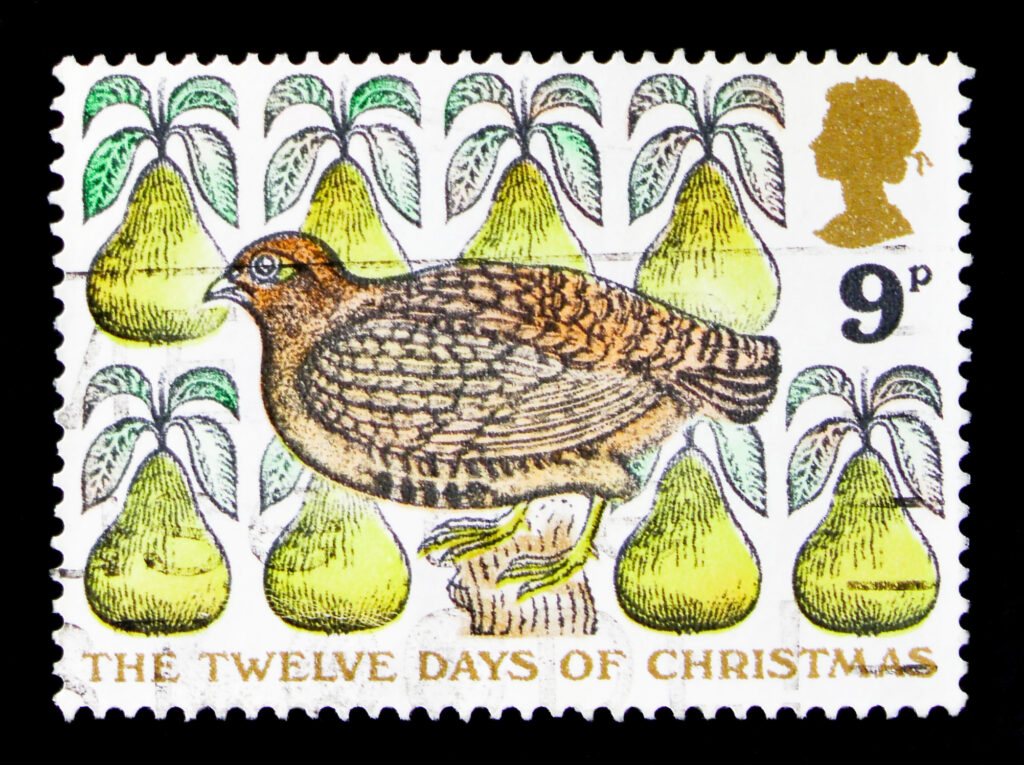
The cumulative carol “The Twelve Days of Christmas” refers to the Christian period of celebration running from Christmas Day (December 25th) until Epiphany (January 6th), and the song’s text first appeared in England in 1780 as a popular children’s memory game. A widely discussed theory suggests the song held a secret religious meaning during periods of English history when Catholic worship was suppressed, functioning as a hidden catechism where each gift symbolized a core tenet of the faith—for instance, the Partridge in a Pear Tree symbolized Jesus Christ, and the Five Gold Rings represented the first five books of the Old Testament. Today, the song is best known for the expense of its 364 cumulative gifts, which are tracked annually by PNC Bank, making the carol a unique fixture in both religious history and modern economic novelty.